3 supplements I never skip for fertility and pregnancy
As a prenatal nutritionist - and a woman in my mid-30s planning to get pregnant this year - there are three supplements I never skip when it comes to preconception and pregnancy.
While my approach is always food first, the reality is that it can be challenging to meet all of your nutrient needs through diet alone. That’s where supplements can provide valuable support.
Your nutrient levels play a crucial role in fertility, and preconception is the time to build up your stores in preparation for pregnancy and postpartum. Nutrient needs are at their highest during these stages, so having the right foundational supplements is key. Here are my top three must-have supplements for fertility and pregnancy.
1. A High-Quality Multinutrient
Think of your prenatal multivitamin as an insurance policy. Even with the best diet, gaps can exist, and a well-formulated prenatal fills in those nutritional gaps. It provides essential vitamins and minerals to help meet the increased nutrient demands of pregnancy while optimising fertility and supporting your baby’s development.
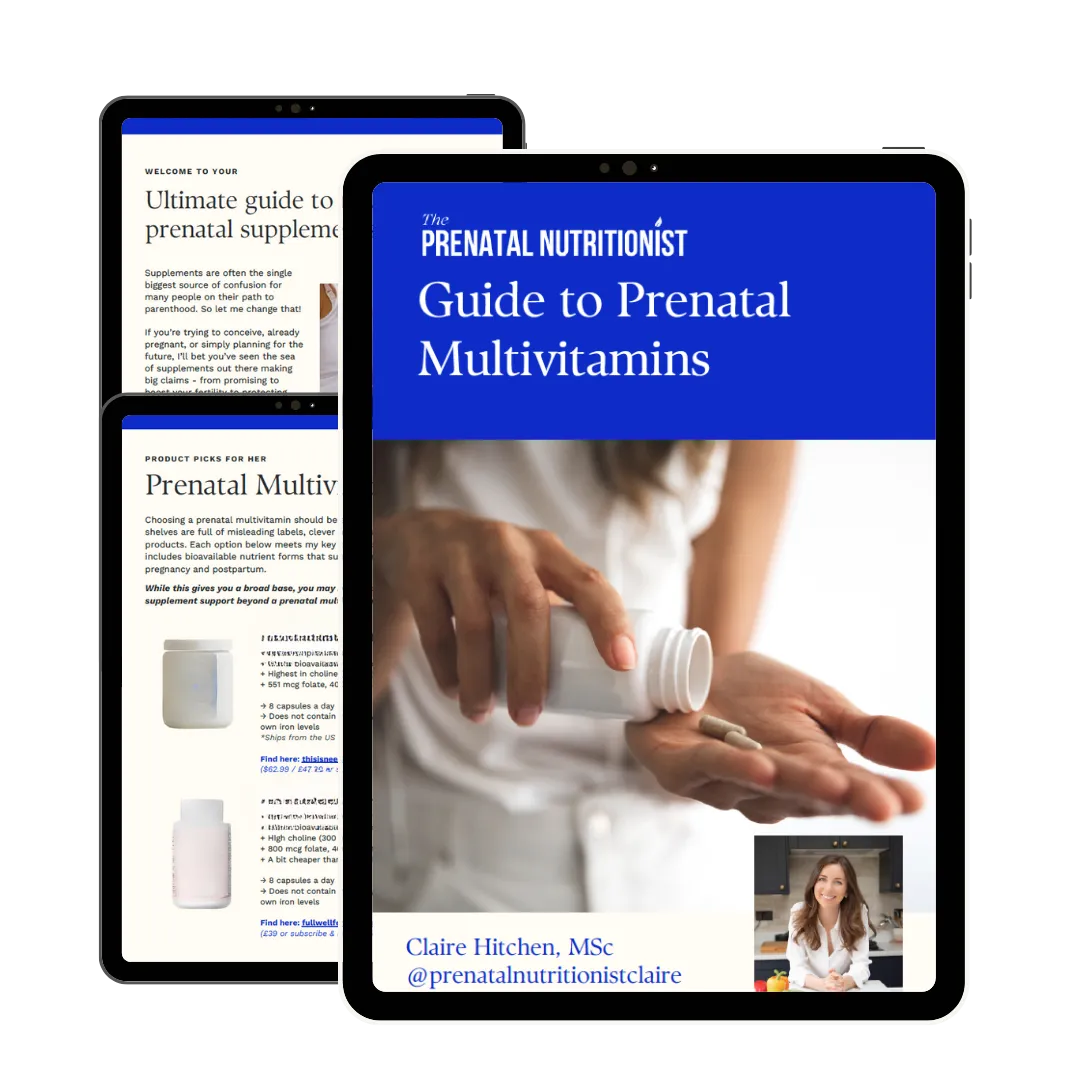
Not all prenatal vitamins are created equal, so it’s important to choose a high-quality one that contains bioavailable forms of key nutrients. If you’re unsure where to start, my Prenatal Supplements Guide ebook includes my top recommended multivitamins with pros and cons to help you choose the best option for you.
2. Choline
Choline is crucial for foetal brain development and plays a key role in preventing neural tube defects (NTDs). Many people associate folate with NTD prevention, but choline is just as essential.
The problem? Most prenatal vitamins don’t contain enough choline - if they include it at all!
The recommended daily intake for pregnancy is at least 450mg of choline, but emerging research suggests that higher intakes (900mg per day) may provide even greater benefits.
While food sources like eggs, liver, and meat contain choline, most people don’t get enough through diet alone, making supplementation an important consideration.
Bonus tip: I always recommend including choline-rich foods in your diet, such as eggs, which provide about 150mg per yolk!
3. Omega-3 (DHA)
Omega-3 fatty acids, particularly DHA (docosahexaenoic acid), are essential for your baby’s brain development, vision, and overall nervous system health. However, most people don’t consume enough omega-3s through diet alone.
The minimum recommended intake is 300mg of DHA per day, but recent studies suggest that higher intakes (600-800mg daily) during pregnancy may offer even greater benefits.
When choosing an omega-3 supplement, opt for a high-quality fish oil or an algae-based supplement (if you’re vegetarian or vegan). Avoid cod liver oil, as it can contain high levels of vitamin A, which can be harmful in excessive amounts during pregnancy.
Food tip: I also prioritise eating at least two servings of oily fish per week (such as salmon, sardines, or mackerel) to naturally boost my omega-3 intake.
Final thoughts
Preconception and pregnancy nutrition are all about setting yourself up for success by optimising your nutrient stores. While diet is the foundation, these three supplements - a high-quality prenatal, choline, and DHA - play a vital role in supporting fertility, a healthy pregnancy, and your baby’s development.
If you want a science-backed guide to choosing the best prenatal supplements, check out my Prenatal Supplements Guide ebook, where I break down my top recommendations, including what to look for (and what to avoid) in a supplement.
Got questions about supplements? Get in touch with me here or on Instagram @prenatalnutritionistclaire